
Quick Summary
A malfunctioning, rusted, or heat-warped damper allows heated air to escape while letting cold drafts enter the home, making professional fireplace damper repair in Smithtown essential for restoring energy efficiency. As trusted local specialists, Sterling Chimney Cleaning Bridgeport diagnoses jammed linkages and failing throat plates to resolve drafts on the first visit, often recommending airtight top-sealing damper upgrades for lasting protection. Readers will understand repair costs versus replacement benefits and can call Sterling Chimney Cleaning Bridgeport to schedule a professional damper inspection or request a free detailed written estimate.
Fireplace Damper Repair Guide: Practical Solutions to Stop Drafts
When cold air pours into your living room during windy weather, a malfunctioning fireplace damper is often the primary culprit. In general, a functioning damper acts like a closed window inside your chimney flue. When rust, creosote buildup, or heat-warped metal prevents it from sealing tight, your home can lose heated air around the clock. Quality fireplace damper repair helps eliminate these drafts, manage heating loss, and keep rain and pests out of your chimney system.[1]
Whether your damper handle is jammed or cold air is noticeable around the firebox, an experienced chimney technician from Sterling Chimney Cleaning Bridgeport can determine if a mechanical adjustment will suffice or if it is advisable to upgrade to a modern top-sealing unit.
Quick Overview: Fixing a Damper vs. Replacing It
Most fireplace damper problems typically stem from three common issues: broken or rusted mechanical linkages, thick creosote blocking the plate, or a cast-iron throat frame that has warped over time from high-heat fires. Minor linkage jams and light rust can often be cleaned and lubricated. However, if the cast-iron plate is warped or cracked, standard throat repairs may not hold long-term. In many cases, securing the old plate open and installing an airtight top-sealing damper at the chimney cap serves as an effective, lasting solution.
What Does Fireplace Damper Repair Typically Cost?
While exact costs vary depending on chimney height, roof accessibility, and regional service rates, standard damper repair and replacement projects generally fall within broad consumer ranges of approximately $150 to $550+. Minor mechanical adjustments and track cleanouts typically represent the lower end of the pricing spectrum, while installing a complete top-sealing damper assembly or addressing surrounding masonry repairs can reach the higher end.[2]
Typical Damper Service Price Ranges
Attempting to re-seat an aged or warped cast-iron throat plate may lead to repeat maintenance needs, as traditional metal-on-metal throat designs generally do not create an airtight seal. Installing a top-mounted damper is widely considered a practical long-term upgrade.
| Service Type | Estimated Cost Range | General Scope of Work |
|---|---|---|
| Throat Damper Tune-Up | $150 – $250 | Clearing soot and debris, freeing stuck mechanical tracks, lubricating pivot pins. |
| Top-Sealing Damper Installation | $250 – $550 | Mounting a spring-loaded gasket damper at the flue top and routing a steel cable to the firebox. |
| Flue Masonry & Collar Repair | $400 – $900+ | Repairs to damaged flue tiles, mortar joints, or firebox brickwork near the damper frame. |
Factors That Can Impact Total Repair Costs
- Roof pitch and chimney height: Multi-story homes or steep roofs generally require additional ladder setups and safety staging.
- Condition of the flue: Heavy creosote buildup typically requires professional sweeping before a technician can safely inspect or mount new damper components.
- Masonry deterioration: If moisture has degraded the top flue tile or cracked the chimney crown, addressing those masonry issues is usually recommended during installation.
Should You Repair a Throat Damper or Upgrade to a Top-Sealing Model?
Need fireplace damper repair in Smithtown?
We’re available now — call for a fast, free estimate.
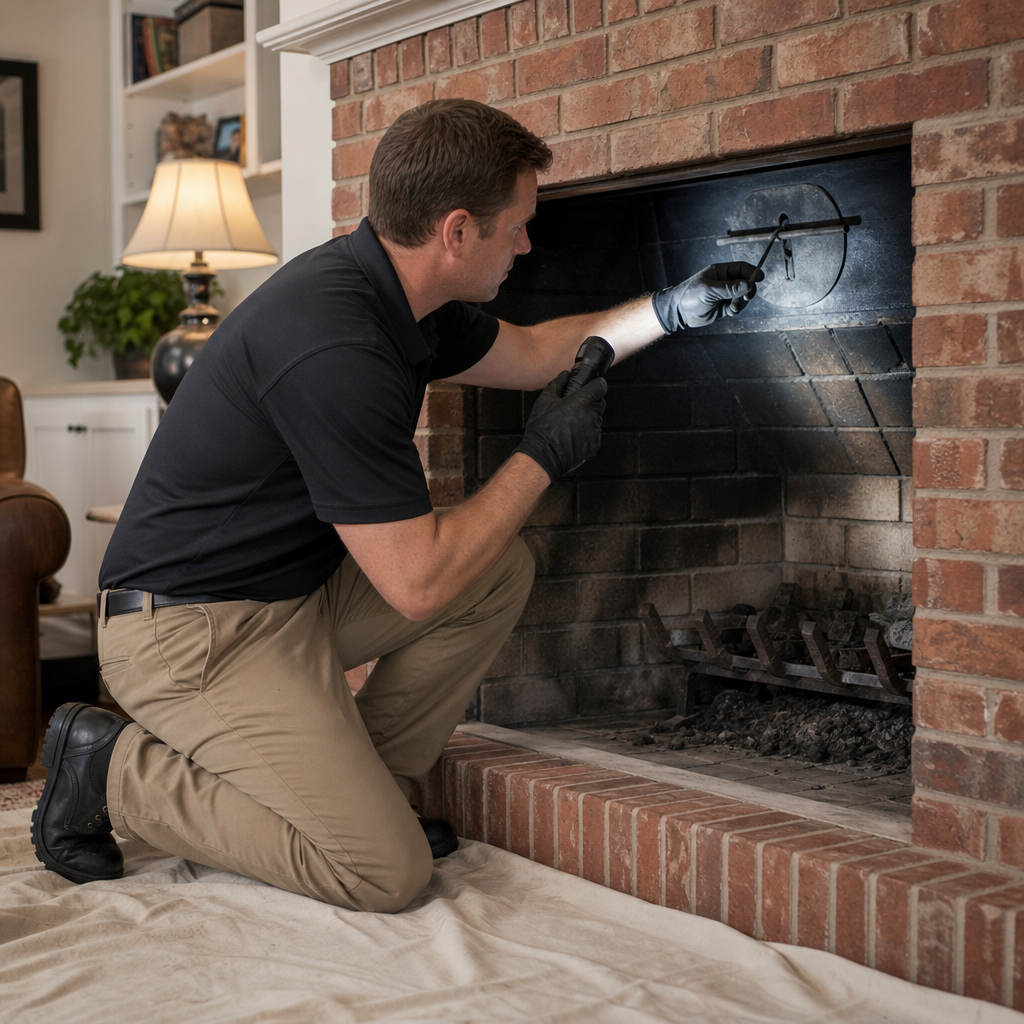
Many older homes feature original cast-iron throat dampers located directly above the firebox. While repairing these units may seem straightforward, standard throat dampers have inherent physical limitations compared to modern alternatives.
| Feature | Cast-Iron Throat Repair | Top-Sealing Damper Upgrade |
|---|---|---|
| Seal Location | Inside the firebox throat | At the top of the chimney stack |
| Seal Mechanism | Metal-on-metal fit | Silicone rubber gasket seal |
| Flue Temperature | Flue generally remains cold inside the chimney column | Flue tends to stay warmer inside the home envelope |
| Weather & Animal Defense | Typically requires a separate exterior cap | Built-in cap and protective screen |
| Draft Reduction | Partial (air can still seep around edges) | Substantial (designed for an airtight seal) |
Considerations for Cast-Iron Throat Dampers
Traditional throat dampers sit directly above the firebox where heat is most intense. Over years of use, repeated heat exposure can warp cast iron, preventing the plate from resting flush against its frame. In addition, as noted by Sterling Chimney Cleaning Bridgeport, metal-on-metal throat designs often leave small gaps where conditioned indoor air can escape up the chimney.
Furthermore, a throat damper leaves the upper flue open to cold outside air. This cold air can cool the chimney masonry, contributing to downdrafts and allowing chilly air to pass through small gaps in a closed throat plate.
How Top-Sealing Dampers Work
A top-sealing damper relocates the seal from the base of the chimney to the top flue opening. When closed using a stainless-steel control cable mounted in the firebox, a durable gasket creates a tight seal at the chimney top.
This configuration helps keep the air column inside the flue closer to indoor temperatures, mitigating draft effects. Sealing the top of the flue also aids in deflecting rain, snow, debris, and animals without requiring separate exterior capping hardware.
Common Signs That a Damper Needs Attention
Identifying damper issues early can help prevent unnecessary heat loss, moisture intrusion, and indoor air quality concerns.
- Drafts near the fireplace: Feeling noticeable airflow near the hearth when the fireplace is not in use often indicates that the damper is warped or not closing fully.
- Stiff or binding controls: When a poker pull, rotary handle, or lever requires excessive force to move, forcing the mechanism can risk damaging pins or dislodging the plate.
- Smoke entering the room: A damper plate that cannot open fully can restrict smoke exhaust, directing smoke and combustion gases back into the living space.
- Creosote odors during humid weather: An unsealed damper can allow outdoor air to push downdrafts through soot-lined flues, carrying chimney odors indoors.
- Rust or moisture in the firebox: Rust debris or water inside the hearth indicates moisture entry, which can corrode metal linkages and deteriorate surrounding mortar.
Frequently Asked Questions About Damper Repair
Can a stuck throat damper be fixed without tearing out masonry?
Yes, in most cases major masonry demolition is unnecessary. If the original cast-iron throat frame is seized or cracked, technicians from Sterling Chimney Cleaning Bridgeport commonly lock the existing plate in the open position and install an airtight top-sealing damper at the chimney top.
Are top-sealing dampers compatible with gas log fireplaces?
Yes, provided safety standards are met. When operating a top-sealing damper with vented gas logs, safety codes generally require a fixed damper clamp to prevent the damper from closing completely. This helps ensure exhaust gases cannot accumulate indoors if the gas logs are operated.
Can household lubricants be used on a stuck damper handle?
Standard household lubricants are generally flammable and can vaporize quickly during a fire, potentially leaving residues that attract soot. Dampers should typically be cleared of debris and treated with high-temperature, graphite-based lubricants suited for fireplace hardware.
How should a homeowner arrange a fireplace damper inspection?
Homeowners can contact a qualified chimney professional like Sterling Chimney Cleaning Bridgeport to perform a visual and mechanical assessment of the flue. A technician can examine the condition of the throat plate, inspect the flue liner, and provide recommendations for repair or top-sealing installation.
Need fireplace damper repair in Smithtown?
We’re available now — call for a fast, free estimate.
Sources
- Reliability of Fire Dampers, Smoke … – mgaleg.maryland.gov
- Crossref Metadata Search – search.crossref.org
Related reading: Chimney Crown Repair in Waterbury – Call Now-10% Off – On-Site in 60 Minutes – Free Estimate
Related reading: Chimney Cleaning in Yaphank – 10% Off & Free Estimate – Same-Day Service
Related reading: Chimney Cap Replacement in Danbury – 10% Off & Free Estimate – Same-Day Service
Frequently Asked Questions
How long does a fireplace damper repair or top-sealing damper installation typically take?
Most standard damper repairs and top-sealing damper installations take between one and two hours to complete. Technicians from Sterling Chimney Cleaning Bridgeport arrive fully equipped to assess mechanical linkages, install replacement units, and resolve drafts on the first visit.
How can I test if my fireplace damper is leaking cold air?
You can check for leaks by closing the damper and holding a lit incense stick or a thin tissue near the firebox opening to see if drafts pull the smoke upward. If you detect air movement, sudden temperature drops, or creosote odors, call Sterling Chimney Cleaning Bridgeport to schedule a professional damper inspection.
Does replacing an old throat damper with a top-sealing model lower heating costs?
Yes, top-sealing dampers create an airtight silicone gasket seal at the chimney top that prevents conditioned household air from escaping into the flue. Homeowners working with Sterling Chimney Cleaning Bridgeport frequently see improved thermal efficiency and lower seasonal heating bills following a top-mounted damper upgrade.
About the author
 |
Daniel Preston Daniel Preston is a certified chimney sweep with over 12 years of hands-on experience in residential masonry and chimney maintenance. Holding a certification from the Chimney Safety Institute of America (CSIA), he specializes in translating complex safety standards into actionable advice for homeowners. Daniel focuses on providing clear, accessible information regarding emergency repairs, routine maintenance, and inspection best practices to help families maintain safe and efficient heating systems. |
Chimney overdue for a cleaning or inspection?
We’re available now — call for a fast, free estimate.
Call Now - Free Estimate