
Quick Summary
Routine chimney cleaning in Hauppauge protects residential properties from severe fire hazards and carbon monoxide leaks caused by wood creosote buildup and acidic heating condensation. Industry experts at Sterling Chimney Cleaning emphasize that complete maintenance requires multi-point visual diagnostics and HEPA-contained mechanical sweeping to identify hidden flue cracks, water intrusion, and liner decay. Readers will understand how to spot critical warning signs of venting damage and be prepared to schedule a comprehensive chimney inspection and sweep with a certified specialist.
Chimney Cleaning in Hauppauge: How to Ensure Fire Safety Fast
Keeping up with regular chimney cleaning in Hauppauge does far more than clear out soot; it protects your home from the leading causes of residential heating fires. Federal fire statistics from the U.S. Fire Administration show that confined fires in flues, chimneys, and fuel burners make up roughly 77% of all home heating fires. While wood fires produce dangerous creosote, oil and gas heating systems can also produce acidic condensation that may contribute to flue liner wear over time.[1]
Sterling Chimney Cleaning delivers detailed chimney maintenance across Hauppauge and Suffolk County. We focus on complete system health, pairing mechanical sweeping with thorough diagnostics to spot hidden liner cracks, acid corrosion, and structural masonry issues before they turn into major safety hazards.[5]
What Does Chimney Cleaning Cost in Hauppauge?
No verified Hauppauge-specific price was found. The cost of chimney cleaning generally depends on your heating fuel, flue height, system accessibility, and the level of buildup inside the stack. According to Sterling Chimney Cleaning Bridgeport, a standard sweep and visual inspection for a well-maintained wood or heating flue remains the most economical route, while heavily neglected flues or multi-flue setups require more labor and specialized equipment.[3]
| Service Type | Primary Focus | Diagnostic Scope | Typical Pricing Factors |
|---|---|---|---|
| Standard Sweep & Inspection | Soot, creosote, and debris removal | Full internal and external visual assessment | Flue height, accessibility, level of buildup |
| Chimney Cap Installation | Water diversion and animal exclusion | Crown condition and flue dimension check | Single-flue vs. custom multi-flue stainless/copper |
| Flue Liner Restoration | Containment of exhaust and heat | Internal camera evaluation for cracks/spalling | Flue length, fuel type, liner material (clay vs. steel) |
Key Factors That Influence Your Final Estimate
Several distinct elements affect the total cost of your service visit:
- Fuel Type and Residue: Standard wood soot sweeps clean quickly, but glazed stage-three creosote demands chemical treatments and mechanical rotary descaling. Oil and gas heating flues require checking for acidic sand and mortar decay at the base.
- Accessibility and Roof Pitch: Multi-story homes, steep rooflines, and complex chimney stacks require additional safety rigging and setup time.
- Flue Configuration: Homes with multiple appliances venting through separate flues inside one masonry structure require individual inspection and cleaning for each passage.
Sterling Chimney Cleaning provides clear, upfront pricing with free written estimates. We also offer a 10% discount for first-time clients scheduling routine maintenance or chimney repair in Hauppauge.
The Hidden Hazard: How Acidic Condensation and Creosote Damage Flues
Need chimney cleaning in Hauppauge?
We’re available now — call for a fast, free estimate.
Most Long Island homeowners think chimney sweeping is only necessary for traditional wood-burning fireplaces. In reality, dedicated flues connected to your central oil or gas heating system face continuous chemical wear during cold New York winters.[4]
Oil and Gas Flue Acid Decay
Modern boilers and furnaces extract substantial heat from their fuel, which can result in lower exhaust temperatures entering the chimney. When cooler exhaust rises up an exterior masonry stack, moisture can condense along flue walls and combine with combustion byproducts.
Over time, acidic condensation may soak into terracotta clay tiles, breaking down the chemical binders in the ceramic. Warning signs of internal acid decay include:
- Tile Shards in the Cleanout: Curved fragments of terracotta clay or reddish, sand-like dust collecting at the base of your cleanout door.
- Exterior Masonry Spalling: Brick faces chipping, flaking, or popping off due to acidic moisture traveling outward through the mortar joints.
- Sulfur and Chemical Smells: Sharp, unpleasant exhaust odors noticeable near the boiler room or along walls where the chimney runs.
- Draft Restriction: Deteriorated tile pieces falling into the flue base, partially blocking exhaust airflow and creating a carbon monoxide hazard.
Wood Creosote and Masonry Thermal Shock
In wood-burning fireplaces and stoves, smoke condenses into combustible creosote along the flue walls. New York State fire safety materials identify creosote accumulation as the leading cause of chimney fires.[2]
When heavy creosote ignites, internal flue temperatures can surge past 2,000 degrees Fahrenheit in minutes. This sudden heat causes severe thermal shock: the inner clay expands rapidly while the surrounding brick and mortar stay cold, cracking the liner wide open. Once a flue liner splits, intense heat and toxic flue gases can reach nearby structural wood framing.
What Is Included in a Multi-Point Chimney Sweep and Inspection?
When you book professional chimney cleaning in Hauppauge, the service should cover your entire venting setup from the basement cleanout to the rooftop crown.
1. Internal Flue and Appliance Diagnostic
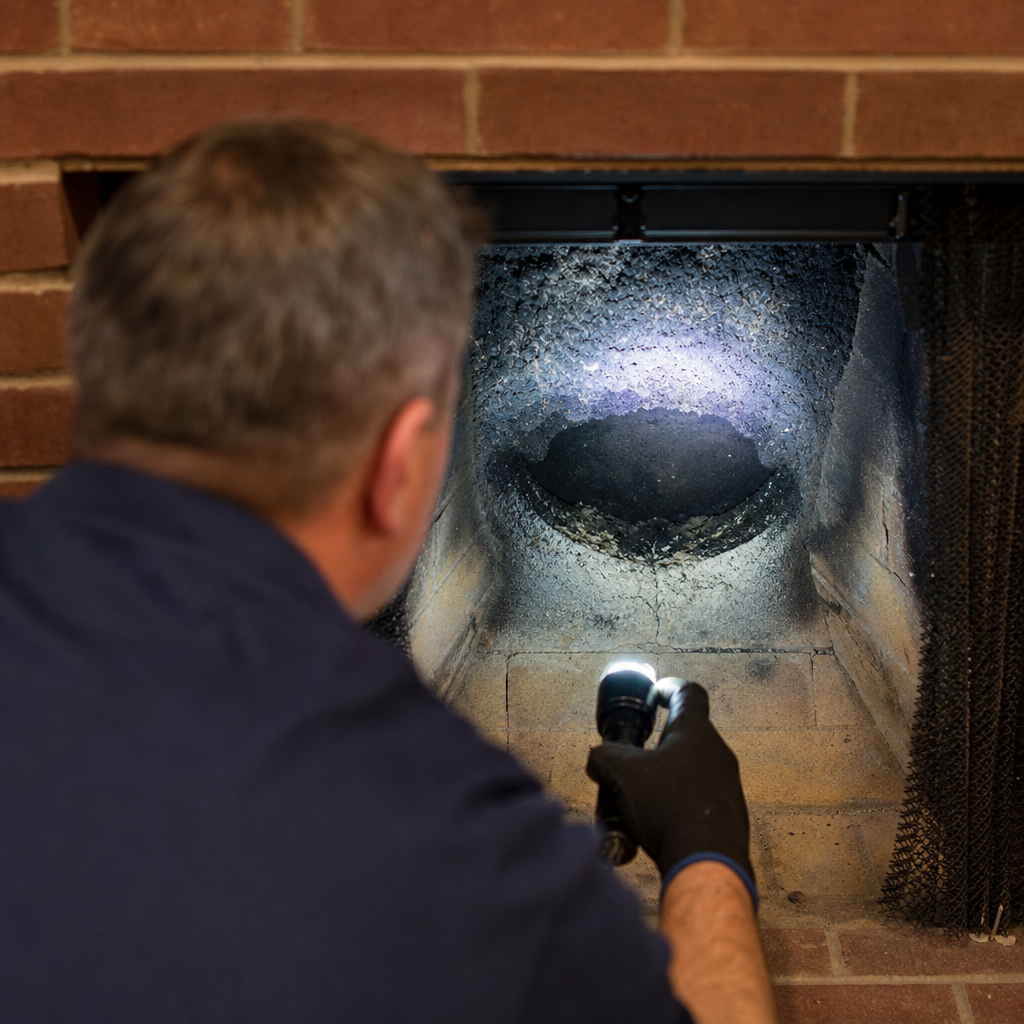
A complete sweep starts with evaluating the interior walls of the flue. Technicians look for joint separation, flue tile cracks, creosote glaze, and acidic flaking. Verifying the physical condition of the flue ensures your heating appliances vent safely without leaking carbon monoxide into your living quarters.
2. Rooftop Crown, Flashing, and Chimney Cap Inspection
Exterior components keep water out of your masonry structure. Water intrusion accelerates freeze-thaw cracking during Long Island winters, degrading chimney mortar rapidly. A standard inspection checks:
- The Chimney Crown: Examining the concrete wash at the top of the stack for shrinkage cracks and surface spalling.
- Flashing and Sealants: Inspecting metal roofline flashing to verify watertight seals against driving rain.
- Chimney Caps and Spark Arrestors: Ensuring protective mesh screens are securely fastened to block raccoons, birds, and squirrels while keeping sparks contained.
3. Dust Containment and Firebox Sweeping
Professional sweeps, such as the team at Sterling Chimney Cleaning Bridgeport, prioritize home cleanliness. Technicians place drop cloths across hearth areas, use high-efficiency particulate air (HEPA) dust containment vacuums to catch airborne soot, and scrub the firebox, smoke chamber, and flue walls clean without releasing dust into your home.
Frequently Asked Questions
How often should I have my chimney swept and inspected?
Under the National Fire Protection Association (NFPA 211) standard, chimneys, fireplaces, and vents should be inspected at least once a year. Even if you rarely light your wood fireplace, annual inspections for heating flues are essential to catch acid condensation, bird nests, and cracked liners early.
How long does a standard chimney cleaning take?
The time required for a standard chimney sweeping and multi-point inspection depends on the level of buildup and roof accessibility. If secondary repairs or chemical creosote treatments are required, your technician will detail the exact timeframe in your written estimate.
Are chimney sweeps in Hauppauge insured?
Reputable chimney contractors, such as Sterling Chimney Cleaning Bridgeport, maintain active general liability insurance. Working with an insured, owner-operated company ensures high standards of craftsmanship and accountability on your property.
What are the immediate signs that I need chimney repair in Hauppauge?
Look out for flaking bricks (spalling), white powdery salt deposits on exterior brickwork (efflorescence), rust streaks on heating equipment, sulfur smells indoors, or loose clay fragments inside the cleanout pit. If you spot any of these warning signs, schedule a professional safety evaluation right away.
Protect your home and family with dependable, mess-free chimney cleaning in Hauppauge. Contact Sterling Chimney Cleaning today to speak directly with an experienced specialist, receive a detailed written estimate, and claim a 10% discount on your first service visit.
Need chimney cleaning in Hauppauge?
We’re available now — call for a fast, free estimate.
Sources
- Heating Fires in Residential Buildings (2017-2019) – usfa.fema.gov (2019)
- [PDF] Code Council 2020-21 Workgroup Executive Summary November … – dos.ny.gov (2020)
- Heating Fires in Residential Buildings (2017-2019) – usfa.fema.gov (2019)
- Consumer Safety Alert | CPSC.gov – cpsc.gov
- Chimney Fire Safety – NY.gov – dhses.ny.gov
Chimney Cleaning in Nearby Cities
We also serve the communities around Hauppauge:
- Chimney Cleaning in Kings Park
- Chimney Cleaning in Saint James
- Chimney Cleaning in Commack
- Chimney Cleaning in Fort Salonga
Frequently Asked Questions
How do professionals remove glazed stage-three creosote from a chimney flue?
Stage-three creosote forms a dense, glassy glaze that standard wire brushes cannot safely remove without damaging the flue tiles. Specialists like Sterling Chimney Cleaning apply chemical descaling agents to alter the chemical structure of the tar before using mechanical rotary equipment to safely scour the flue clean.
How should I prepare my fireplace area before the technicians arrive?
Stop burning wood or running connected heating appliances at least 24 hours in advance so the system is completely cool. Clear decorative items, fire tools, and light furniture about six to eight feet away from the hearth to provide clean access for equipment and HEPA dust-containment setups.
Why do oil and gas heating flues need professional cleaning if they do not burn wood?
Oil and gas combustion releases moisture and sulfur byproducts that create acidic condensation along the flue walls. Over time, this acid breaks down clay liners into fallen shards that can block exhaust airflow and cause dangerous carbon monoxide backups.
About the author
 |
Daniel Preston Daniel Preston is a certified chimney sweep with over 12 years of hands-on experience in residential masonry and chimney maintenance. Holding a certification from the Chimney Safety Institute of America (CSIA), he specializes in translating complex safety standards into actionable advice for homeowners. Daniel focuses on providing clear, accessible information regarding emergency repairs, routine maintenance, and inspection best practices to help families maintain safe and efficient heating systems. |
Chimney overdue for a cleaning or inspection?
We’re available now — call for a fast, free estimate.
Call Now - Free Estimate