
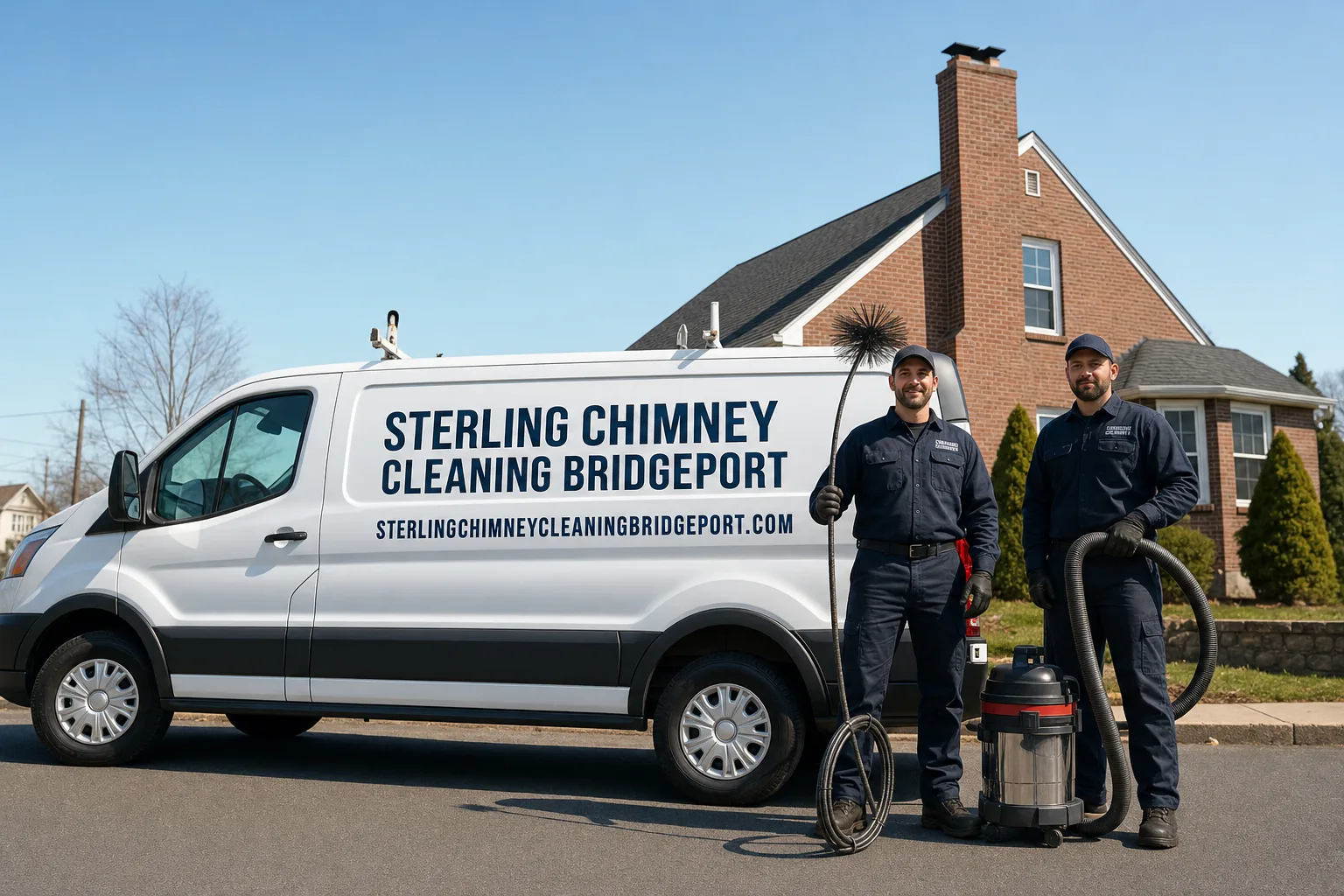

Fast, Reliable Chimney Repair Across Farmingville
Chimney repair in Farmingville, NY typically runs $850–$4,500 depending on scope, with most mortar repointing and spalling brick jobs completed in one to two days. Gary Murphy and our Chimney Repair team make the drive from Bridgeport to Farmingville regularly — we’re familiar with the 11738 ZIP code, the postwar Cape Cods along North Ocean Avenue, and the split-levels near College Road where we’ve worked for years. If you’re noticing loose bricks, water stains on your ceiling near the chimney breast, or a drafty fireplace that used to draw properly, call (888) 975-6389. We’ll schedule a free inspection and give you upfront pricing before any work begins.
Why Sterling Chimney Cleaning Bridgeport Is Farmingville’s Preferred Chimney Repair Company
We’ve earned our reputation in Farmingville one job at a time. More than 1,200 homeowners have trusted us across our service area, and our 4.7 average star rating from 1,234 verified reviews reflects the accountability that comes from having Gary Murphy — the owner — serve as lead technician on every call. When you book with us, you’re not getting a dispatched subcontractor who’s learning your chimney on the fly. Gary handles it personally.
Our response time to Farmingville is typically same-day or next-day for urgent issues like storm-damaged crowns or leaking flues. We know the local housing stock intimately: the 1950s–1970s Cape Cods, ranches, and split-levels built during Long Island’s postwar expansion. Their original clay-tile-lined masonry chimneys are now 50–70 years old, and we’ve diagnosed enough of them to recognize failure patterns that generalist contractors miss. Fourteen years in one trade teaches you what to look for.
Our Chimney Repair Services in Farmingville
Chimney Rebuilding
Sometimes the damage has progressed past the point of spot repair. In Farmingville, we see this most often on chimneys that have endured decades of the wet-dry cycling that Long Island’s humid marine climate inflicts — moisture-laden air drawn from Long Island Sound to the north and the Great South Bay to the south keeps masonry in perpetual expansion and contraction. When multiple courses of brick are spalled, the liner has collapsed, or the structure has shifted, we rebuild from the roofline up using professional-grade materials from Copperfield and Olympia Chimney. We match existing mortar color where possible, and we never leave a rebuild without addressing the underlying moisture issue that caused it.
Mortar Repointing
Farmingville’s postwar chimneys were built with lime-based mortars that simply weren’t formulated to withstand 50–70 years of freeze-thaw cycles and acidic oil-heat exhaust. The mortar joints between bricks erode, creating gaps that channel water directly into the wall cavity. Our repointing process removes deteriorated mortar to a consistent depth, then packs fresh, properly formulated mortar that matches the thermal expansion characteristics of the original brick. On a recent job near Horseblock Road, we repointed a 1962 ranch chimney where the original mortar had turned to sand — the homeowner had assumed the whole chimney needed rebuilding, but targeted repointing saved the structure at a fraction of the cost.

Spalling Brick Repair
Spalling — the flaking and crumbling of brick faces — is epidemic in Farmingville’s older neighborhoods. The combination of marine humidity and oil-heat acidic soot creates a one-two punch: moisture penetrates the brick, freezes, expands, and pops off the face, while acidic condensation inside the flue accelerates deterioration of the inner wythe. We replace spalled bricks with matching units where possible, or apply specialized resurfacing compounds for limited damage. More importantly, we diagnose why the spalling occurred so it doesn’t repeat.

Chimney Waterproofing
Waterproofing isn’t optional in Farmingville — it’s structural maintenance. Long Island’s climate keeps chimneys wet for more of the year than inland New York markets, and the porous nature of older brick means water absorption rates are high. We apply vapor-permeable waterproofing agents from HeatShield that allow the chimney to breathe and dry out while repelling liquid water. This is especially critical on north-facing exposures and chimneys shaded by mature trees, both common in Farmingville’s established neighborhoods.

Flashing Repair
Chimney flashing — the metal barrier where the chimney penetrates the roof — is a common leak point in Farmingville homes. The original step flashing on many 1960s and 1970s houses was galvanized steel that corrodes after decades of salt-air exposure. We replace failed flashing with copper or stainless steel, integrated properly with the roofing system, and we seal with high-temperature sealants rated for chimney applications.

Tuckpointing
For chimneys where the mortar joints are sound but weathered, tuckpointing provides both cosmetic renewal and protective sealing. We cut clean, consistent joints and apply color-matched mortar that restores the chimney’s appearance while stopping water infiltration. This is often the right approach for Farmingville homeowners preparing to sell, or those who want to arrest deterioration before it requires more extensive intervention.

What happens when you call
- 1
A real person answersNo phone trees — you reach a local pro.
- 2
You get an upfront price rangeHonest numbers before anyone is dispatched.
- 3
A background-checked tech heads outLicensed & insured, dispatched right away.
- 4
You approve before work beginsNothing starts until you say go.
Trusted Brands We Service in Farmingville
We install DuraFlex, HeatShield, and Copperfield — the materials professionals specify, not the brands pulled off a retail shelf. For Farmingville’s oil-heat chimneys, DuraFlex stainless steel liners resist the acidic corrosion that destroys clay tile, while HeatShield’s cerfractory resurfacing products restore deteriorated flue surfaces without full liner replacement. We keep common sizes and fittings in stock, which means faster turnaround for Farmingville customers and no waiting for special orders on most jobs. When a nor’easter blows through and damages your crown or cap, that local inventory matters.
Common Chimney Repair Problems We See in Farmingville Homes
- Acidic oil soot erodes mortar joints between clay tiles. Farmingville sits in Suffolk County’s fuel-oil belt, where home heating oil use rates rank among the highest in the nation. The sulfur-laden glaze from oil combustion chemically softens the mortar holding clay tile sections together, accelerating liner collapse even when the chimney’s exterior brick looks perfectly sound. This is a failure mode that technicians in wood-heat markets rarely encounter.
- Humid marine air and wet-dry cycling spall brick faces and erode mortar. Long Island’s climate keeps Farmingville chimneys in near-constant moisture flux. Brick absorbs humidity from the air, rainwater drives in during storms, and the sun draws it back out. Over decades, this cycle pops off brick faces and turns mortar joints to powder. The result is loose bricks, leaning chimneys, and water paths straight into the structure.
- Nor’easters knock off chimney caps and damage crowns. Storms arriving from the northeast routinely strip caps and crack concrete crowns on Farmingville homes. Once the crown is compromised, rainwater pours directly into the flue system, where it meets the acidic soot residue and accelerates corrosion. Freeze-thaw cycles then worsen cracks that started as hairlines.
- The corrosion loop: acidic film + cracked liner = accelerated failure. Technicians working Farmingville’s postwar neighborhoods regularly find that oil-heat acidic soot and cracked 1960s clay tile liners have created a self-feeding cycle. The acidic film softens mortar, tiles shift or collapse, gaps allow more condensation, and the corrosion accelerates well ahead of what the exterior suggests. Homeowners are often shocked at the interior damage because the brickwork looked “fine.”
Pricing for Chimney Repair in Farmingville, NY
Here’s what typical chimney repair costs in the Farmingville market:
| Service | Typical Range |
|---|---|
| Mortar repointing (partial) | $850 – $1,800 |
| Spalling brick repair (spot) | $600 – $1,400 |
| Chimney waterproofing | $450 – $950 |
| Flashing repair/replacement | $550 – $1,200 |
| Tuckpointing (full chimney) | $1,500 – $3,200 |
| Chimney crown rebuild | $1,200 – $2,500 |
| Clay tile liner repair/resurfacing | $1,800 – $3,500 |
| Stainless steel liner installation (DuraFlex) | $2,800 – $4,500 |
| Partial chimney rebuild | $3,500 – $7,500 |
What moves the needle within these ranges: accessibility (steep roof pitches cost more), the extent of interior liner damage, and whether we can match existing brick or need to source replacements. Oil-heat acidic soot damage often requires chemical neutralizing treatments before repair work begins — that’s included in our liner repair quotes, not tacked on later. Every estimate we provide to Farmingville homeowners is free, detailed, and valid for 30 days. Call (888) 975-6389 to schedule yours.
We Also Serve Cities Near Farmingville
Our service radius extends naturally to Holtsville, Selden, Centereach, and Holbrook — all sharing the same Suffolk County fuel-oil heating profile and postwar housing stock that we know inside and out. If you’re in one of these neighboring communities and found this page while searching, the same expertise and pricing structure applies. From your first sweep to a full rebuild, one call covers it.
Serving Farmingville, NY — Our Local Coverage Area
We’re based in the Farmingville area and know this community well. Use the map below to see our service coverage — if you’re nearby, we can almost certainly help.
FAQs — Chimney Repair in Farmingville
Your oil-heat system produces sulfur-laden acidic soot that chemically erodes clay tile mortar, while wood heat produces creosote that builds up but doesn’t attack the liner material itself. Farmingville’s position in Suffolk County’s fuel-oil belt means this acidic corrosion is the dominant failure mode here — it’s not a maintenance failing on your part, it’s a different chemical environment that demands different repair approaches. We install acid-resistant DuraFlex stainless liners and apply chemical neutralizers that stop the corrosion cycle. Call (888) 975-6389 for an inspection — estimates are free.
Spalling is common in Farmingville due to the combination of marine humidity and freeze-thaw cycles, but “common” doesn’t mean “acceptable” — it’s a sign that water is penetrating your brick and the deterioration is active. The wet-dry cycling from Long Island Sound and Great South Bay moisture keeps bricks saturated longer than inland climates, so freeze damage is more severe. We can assess whether spot brick replacement, repointing, or full waterproofing is the right intervention. Call (888) 975-6389 for an exact diagnosis — estimates are free.
Schedule an inspection promptly; a cracked crown allows rainwater directly into the flue system, where it accelerates liner corrosion and can damage interior framing. Nor’easter damage is something we address regularly in Farmingville — the northeast storm track hits this area hard. We rebuild crowns with proper slope and drip edges to shed water, and we can install a protective cap if yours was blown off. Call (888) 975-6389 — we’ll prioritize storm damage and get you on the schedule quickly.
We first apply a chemical neutralizer to stop ongoing acidic corrosion, then assess whether the tiles can be resurfaced with HeatShield cerfractory product or if a full DuraFlex stainless steel liner replacement is necessary. On a 1960s split-level on College Road, we found the clay tile liner pitted and softened from years of oil-heat acidic soot. The homeowner had noticed flue odors but no visible exterior damage; we installed a DuraFlex stainless steel liner and applied a chemical neutralizer to stop ongoing corrosion. The right approach depends on the extent of pitting and joint separation we find during inspection. Call (888) 975-6389 — estimates are free.
Yes — the humid marine air and frequent precipitation in this area keep masonry in a near-constant wet-dry cycle that accelerates mortar and brick deterioration. Waterproofing with a vapor-permeable agent allows the chimney to breathe while repelling liquid water, significantly extending the life of repointing and brick repair work. We typically recommend it as part of any exterior repair in Farmingville, especially on north-facing chimneys and those shaded by mature trees. Call (888) 975-6389 to discuss whether your chimney is a candidate — estimates are free.
Written by Gary Murphy, Owner at Sterling Chimney Cleaning Bridgeport, serving Farmingville and Suffolk County since 2010.