
Quick Summary
Chimney crown repair in Waterbury is essential for preventing harsh Connecticut freeze-thaw cycles from turning hairline top-slab fissures into severe masonry deterioration and interior water damage. Sterling Chimney Cleaning Bridgeport serves as an owner-operated masonry and venting specialist that resolves deteriorated crowns correctly using high-compression mortar, custom drip edges, and flexible elastomeric sealants. Homeowners can accurately diagnose top-slab issues and safeguard their heating systems by requesting a ladder-camera inspection alongside a free detailed written estimate for chimney crown repair.
Chimney Crown Repair in Waterbury: Stop Costly Leaks Fast
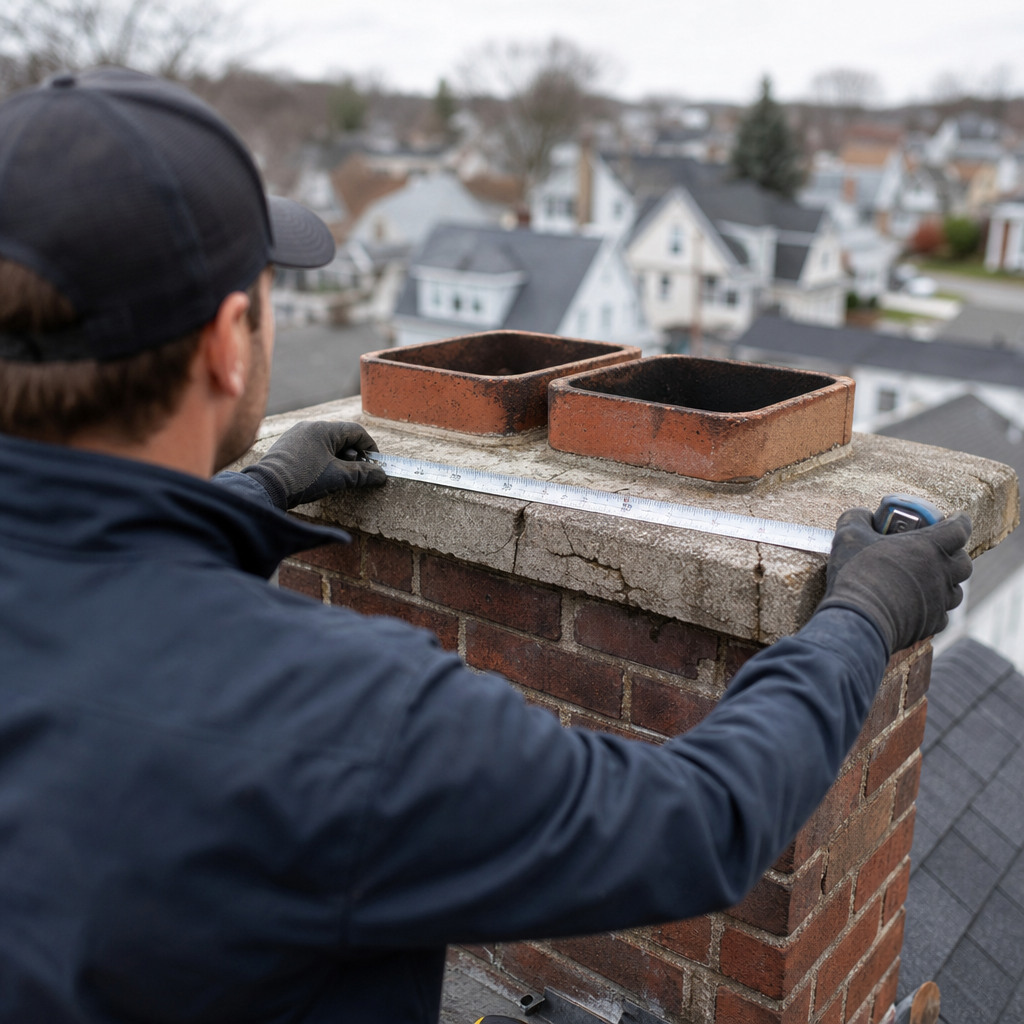
When water starts leaking around your fireplace in Waterbury, the chimney crown at the very top of your stack is often the culprit. In regions with freezing winter weather, rain or melting snow can work its way into hairline cracks in the crown, where freezing temperatures force those small fissures wider open.[2]
A damaged crown allows water to saturate your brickwork, rust your damper, and rot your interior framing. In Connecticut, chimney repair work must be done by a registered home improvement contractor, and homeowners should check whether a permit is required. Choosing the right repair method, whether that means applying an elastomeric seal or pouring an overhanging concrete crown, stops water damage before it reaches your living room.
How Chimney Crown Repair Works
A chimney crown serves as the primary roof for your masonry chimney stack. It is designed to shed water away from the flues and prevent rain from soaking into the bricks below. Repairing a damaged crown involves either sealing minor surface flaws or rebuilding the top slab if structural failure has begun.
Many original chimney tops are thin “mortar washes.” Builders often smoothed leftover masonry mortar around the clay flue tiles at a flat or slight angle. Mortar shrinks as it cures, lacks flexural strength, and absorbs moisture easily. When cold weather hits, these flat mortar caps can crack quickly.
As noted by specialists like Sterling Chimney Cleaning Bridgeport, a professional restoration generally follows a structured process to help keep the chimney dry:
- Inspection: Checking the depth of cracks, identifying loose brickwork, and assessing whether the flue tile has room to expand.
- Thermal joint separation: Providing appropriate space around clay flue tiles to accommodate expansion from heat without cracking adjacent concrete.
- Coating or forming: Applying a flexible elastomeric membrane over stable surfaces, or building forms to pour a reinforced concrete crown with an overhang and drip edge.
Warning Signs Your Chimney Crown Needs Attention
Catching crown damage early prevents expensive structural repairs to the rest of your masonry. Keep an eye out for these clear indicators of water penetration.
Visible Cracks and Spalling on the Top Slab
From the ground or ladder, you may spot fractured chunks of concrete, missing mortar, or loose bricks along the top courses of the chimney. Thin mortar washes crack as water collects on flat spots. If these gaps go unaddressed, seasonal freezing pushes the bricks apart, causing the exterior brick faces to pop off (spall).
Water Stains on Ceilings and Damp Fireboxes
Water entering through a cracked crown often bypasses roof flashing entirely, traveling down the inside of the chimney chase or exterior walls. This typically shows up as brown water rings on ceilings near the fireplace, damp insulation in the attic, or white, powdery salt deposits (efflorescence) on the fireplace bricks inside your home.
Rusted Dampers and Damaged Flue Liners
When rain enters through a broken crown, moisture runs down the outer surface of the clay flue tiles. This constant humidity can rust cast-iron dampers and erode mortar joints. The Connecticut Department of Consumer Protection warns homeowners to watch out for fly-by-night contractors who exaggerate damage or suggest quick patches using basic caulk. A reputable specialist such as Sterling Chimney Cleaning Bridgeport will show you clear photographic evidence of your crown’s condition before recommending a fix.[1]
Understanding Chimney Crown Repair Costs
Need chimney crown repair in Waterbury?
We’re available now — call for a fast, free estimate.
The cost to fix a chimney crown depends on whether the slab can be resurfaced or needs to be torn down and rebuilt. Based on general industry estimates, minor sealing on an accessible, single-flue chimney usually ranges from $150 to $350. Full structural replacements on larger or steeper chimneys generally run between $1,000 and $3,000 or more, depending on scaffolding needs, brick repair requirements, and flue count.[3]
| Feature | Elastomeric Sealant Repair | Full Cast Concrete Rebuild |
|---|---|---|
| Estimated Cost Range (General Industry) | $150 – $350 | $1,000 – $3,000+ |
| Expected Lifespan | 10-15 years | 30+ years |
| Thermal Bond Break | Not Included | Included around all flues |
| Overhang & Drip Edge | Matches existing structure | Cantilevered edge |
| Freeze-Thaw Resistance | High (flexible membrane) | Maximum (solid reinforced slab) |
What Drives Repair vs. Replacement Pricing?
According to Sterling Chimney Cleaning Bridgeport, resurfacing is an economical choice when the existing concrete base is solid and cracks are shallow. However, if the slab is built from regular mortar, has broken into loose chunks, or sits flush with the chimney walls, surface coatings are only temporary. Building a cast-in-place concrete crown with an overhang directs rain away from the brick face, helping avoid future repointing work.
Can a Cracked Chimney Crown Be Sealed, or Does It Need a Rebuild?
Whether your crown can be sealed or must be rebuilt depends on structural integrity, crack width, and how the original top was constructed.
When Flexible Elastomeric Coating Works
If your crown has small surface fractures under 1/8-inch wide and the underlying base is still firmly attached to the chimney stack, Sterling Chimney Cleaning Bridgeport advises that a flexible elastomeric crown coating is an effective solution. These specialized coatings expand and contract with temperature swings, maintaining a continuous watertight barrier over sound concrete.
When Full Reconstruction Is Necessary
If the crown consists of an old mortar wash, is crumbling into loose material, or has deep cracks extending through the slab, sealing will fail. When water gets underneath the sealant, trapped moisture will continue to break the masonry apart.
| Existing Condition | Recommended Solution | Long-Term Result |
|---|---|---|
| Hairline surface cracks (under 1/8″) | Elastomeric crown resurfacing | Bridges gaps, prevents moisture entry |
| Missing chunks, loose mortar base | Poured reinforced concrete crown | Restores structural strength |
| Crown poured flush to brick with no overhang | Rebuild with cantilever and drip edge | Forces water to drip clear of brickwork |
| Flue tiles embedded tightly in concrete | Rebuild with expansion joint | Prevents heat expansion from cracking slab |
A full replacement generally involves pouring a reinforced concrete slab designed to overhang the brickwork. A drip edge groove can be cast into the underside of the overhang so running water drops away from the masonry. Expansion joints installed around flue tiles accommodate thermal movement without stressing the concrete.
Frequently Asked Questions About Chimney Crown Repair
How much does chimney crown repair typically cost?
According to general industry estimates, resurfacing small cracks with professional elastomeric compounds typically costs between $150 and $350. Tearing off a failed mortar wash and forming a reinforced concrete crown generally costs from $1,000 to $3,000 or more, depending on chimney height and flue count.
How long does a chimney crown repair take to complete?
Sealing an existing crown usually takes a few hours on site. A full custom concrete rebuild typically requires framing and pouring the new slab, followed by removing forms and sealing expansion joints once cured.
How often should a chimney crown be inspected?
Regular chimney inspections help catch crown defects early. In Connecticut, Sterling Chimney Cleaning Bridgeport points out that early autumn is a practical time for an evaluation so that any cracks can be sealed before winter rain and snow create freeze-thaw issues.
Can a cracked crown lead to dangerous hazards?
Yes. Unchecked water leaks can damage clay flue liners inside your chimney. Cracked or damaged flue tiles may allow heat, sparks, and combustion byproducts like carbon monoxide to escape into attic or living areas. Keeping the crown watertight protects both the masonry and the heating system.
Need chimney crown repair in Waterbury?
We’re available now — call for a fast, free estimate.
Sources
- Get Your Chimney Cleaned but Be Cautious of Chimney Sweep and … – portal.ct.gov (2025)
- Chimney Repair in Waterbury, CT — How Much Does It Cost? (2026 Prices) – costof.homes (2026)
- Chimney Services near Waterbury, CT | Better Business Bureau – bbb.org
Related reading: Chimney Cleaning in Syosset | Call Now-10% Off | Same-Day Service | Free Estimate
Related reading: Chimney Cleaning in Yaphank – 10% Off & Free Estimate – Same-Day Service
Related reading: Chimney Cleaning in Ridge – Call Now-10% Off – Same-Day Service – Free Estimate
Frequently Asked Questions
How can I verify the exact condition of my chimney crown before committing to a rebuild?
You can request a ladder-camera inspection with Sterling Chimney Cleaning Bridgeport to view high-resolution photographic evidence of top-slab cracking, flue alignment, and brick deterioration. This diagnostic assessment allows the specialist to provide a free detailed written estimate outlining whether flexible elastomeric sealing or a full reinforced rebuild is needed.
Why do standard mortar patches fail quickly during Connecticut winters?
Standard masonry mortar shrinks during curing, lacks flexural strength, and absorbs moisture that expands when frozen during harsh Waterbury freeze-thaw cycles. Sterling Chimney Cleaning Bridgeport prevents premature failure by utilizing high-compression mortar and flexible elastomeric membranes designed to stretch with thermal movement.
What design features prevent a rebuilt chimney crown from cracking again?
A correctly constructed crown includes a cantilevered overhang with an undercut drip edge to shed runoff completely clear of the brickwork below. It must also incorporate thermal expansion joints around the clay flue tiles so heating cycles do not exert outward pressure against the concrete slab.
About the author
 |
Daniel Preston Daniel Preston is a certified chimney sweep with over 12 years of hands-on experience in residential masonry and chimney maintenance. Holding a certification from the Chimney Safety Institute of America (CSIA), he specializes in translating complex safety standards into actionable advice for homeowners. Daniel focuses on providing clear, accessible information regarding emergency repairs, routine maintenance, and inspection best practices to help families maintain safe and efficient heating systems. |
Chimney overdue for a cleaning or inspection?
We’re available now — call for a fast, free estimate.
Call Now - Free Estimate